Ledger Login — Beginner’s Guide to Secure Access, Cold Storage Protection & Safe Self-Custody
This guide explores how to log into Ledger safely, understand the architecture behind hardware wallets, avoid scams, and manage crypto assets with confidence using concepts like private keys, blockchain validation, and cold storage.
Why Ledger Login Requires Attention
Ledger is one of the most trusted names in crypto self-custody, offering hardware wallets that keep private keys offline using secure elements and cold storage techniques.
But even the strongest hardware cannot protect users who log in through fake portals or follow instructions from phishing scams.
Ledger login is not just a button — it is a process that separates interface from signing, ensuring keys never leave the device.
Understanding this flow helps users avoid common mistakes while also deepening their knowledge of concepts such as private keys, transaction signing, blockchain integrity, and hardware isolation.
But even the strongest hardware cannot protect users who log in through fake portals or follow instructions from phishing scams.
Ledger login is not just a button — it is a process that separates interface from signing, ensuring keys never leave the device.
Understanding this flow helps users avoid common mistakes while also deepening their knowledge of concepts such as private keys, transaction signing, blockchain integrity, and hardware isolation.
What Happens During a Ledger Login?
When you log into Ledger:
The software you see is only a viewer — the device remains the guardian.
- The application (Ledger Live) provides the interface
- Your hardware wallet holds the private keys offline
- Authentication happens on the device screen
- Transactions are signed internally without exposing keys
The software you see is only a viewer — the device remains the guardian.
A Near Disaster: Fake Ledger Login Site
Carlos searched for “Ledger login” and clicked a visually identical webpage.
The page asked him to “verify his seed phrase.”
Fortunately, Carlos had read that **Ledger never asks for recovery words online**, so he stopped immediately.
The site was a clone built to steal keys — a tactic used by phishing groups worldwide.
**Knowledge is the best defense. Correct login flow neutralizes most attacks before they begin.**
The page asked him to “verify his seed phrase.”
Fortunately, Carlos had read that **Ledger never asks for recovery words online**, so he stopped immediately.
The site was a clone built to steal keys — a tactic used by phishing groups worldwide.
**Knowledge is the best defense. Correct login flow neutralizes most attacks before they begin.**
Ledger Login — Safe Step-by-Step Process
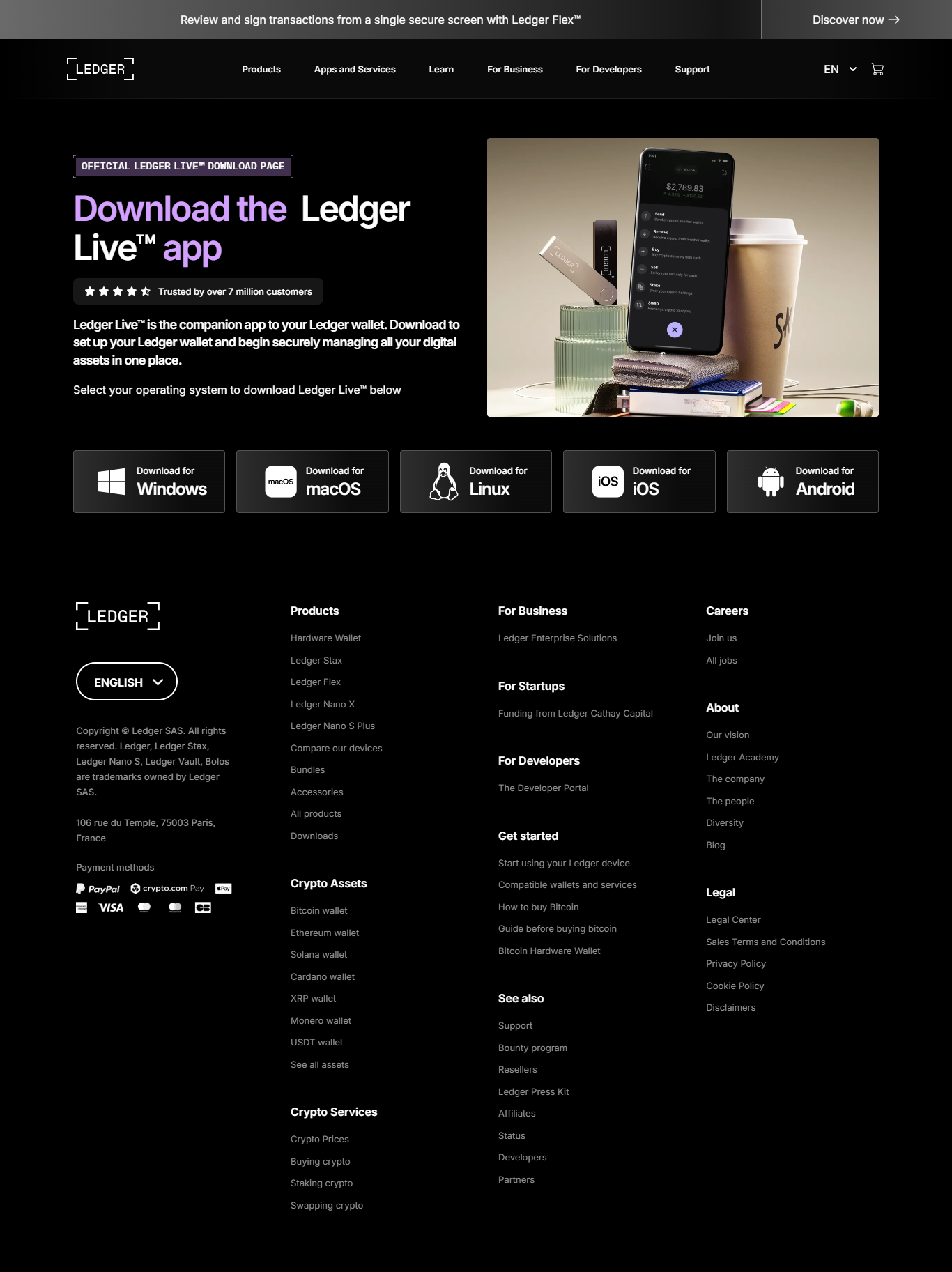
1. Download Ledger Live Only From Official Sources
Imitation sites often appear above the official result.
2. Install & Open Ledger Live
The application functions as a dashboard, not a keyholder.
3. Connect Your Ledger Device
USB for Nano S/S Plus, Bluetooth for Nano X.
4. Enter Your PIN on the Device
Your computer never receives the PIN — the hardware handles everything.
How Ledger Protects Your Assets
Ledger devices rely on:
Concepts such as cryptographic signatures and blockchain immutability reinforce the device’s protection layer.
- Secure element chips that resist physical tampering
- Offline transaction signing
- Device-based verification screens
- Cold storage isolation from the internet
Concepts such as cryptographic signatures and blockchain immutability reinforce the device’s protection layer.
Crypto Wallet Security Comparison
| Wallet Type | Security | Key Control | Use Case |
|---|---|---|---|
| Ledger Hardware Wallet | Very High | User | Cold storage |
| Mobile Wallet | Medium | User | Everyday use |
| Exchange Wallet | Low | Exchange | Trading |
Golden Rules for Ledger Security
✔ Use only official Ledger software
✔ Never share your recovery phrase
✔ Keep backups offline
✔ Approve transactions on the physical screen
✔ Avoid “support” sites requesting sensitive data
✔ Maintain up-to-date firmware
✔ Never share your recovery phrase
✔ Keep backups offline
✔ Approve transactions on the physical screen
✔ Avoid “support” sites requesting sensitive data
✔ Maintain up-to-date firmware
Frequently Asked Questions
1. Does Ledger Live store my keys?
No — they remain on the hardware wallet.
2. Does the login require a password?
Only the device PIN, entered offline.
3. Can Ledger be hacked?
Not in a way that exposes keys due to offline signing.
4. Does it support many cryptocurrencies?
Yes — thousands of tokens and networks.
5. What if the device is lost?
Restore using the recovery phrase on a new Ledger device.
No — they remain on the hardware wallet.
2. Does the login require a password?
Only the device PIN, entered offline.
3. Can Ledger be hacked?
Not in a way that exposes keys due to offline signing.
4. Does it support many cryptocurrencies?
Yes — thousands of tokens and networks.
5. What if the device is lost?
Restore using the recovery phrase on a new Ledger device.
Conclusion — Safe Ledger Login Protects Your Financial Sovereignty
Ledger login is a combination of software interface and hardware validation.
By keeping keys offline, requiring physical verification, and preventing online exposure, Ledger devices provide a robust defense against most attacks.
Safe login habits — such as downloading only official software and never sharing recovery phrases — close the remaining gaps that scammers exploit.
When users follow the correct steps, the combination of cold storage, secure elements, blockchain verification, and offline signing creates a fortress around digital wealth.
Choose authenticity, follow the official process, and keep your crypto true to you — always.
By keeping keys offline, requiring physical verification, and preventing online exposure, Ledger devices provide a robust defense against most attacks.
Safe login habits — such as downloading only official software and never sharing recovery phrases — close the remaining gaps that scammers exploit.
When users follow the correct steps, the combination of cold storage, secure elements, blockchain verification, and offline signing creates a fortress around digital wealth.
Choose authenticity, follow the official process, and keep your crypto true to you — always.